Summer 2026
Welcome to TBC's bi-annual briefing — connecting you with the people, opportunities, and innovative approaches transforming the future of real estate. Inside each issue: leadership insights, upcoming events, network spotlights, online resources and more.
What’s Inside
LEADERSHIP LENS
Making New Markets
There's widespread discussion about the capital access gap. TBC has a proven strategy to solve it. TBC founder Dave Madan breaks down the approach that's already moved $55 million off the sidelines, and what's coming next.-
LEADERSHIP LENS
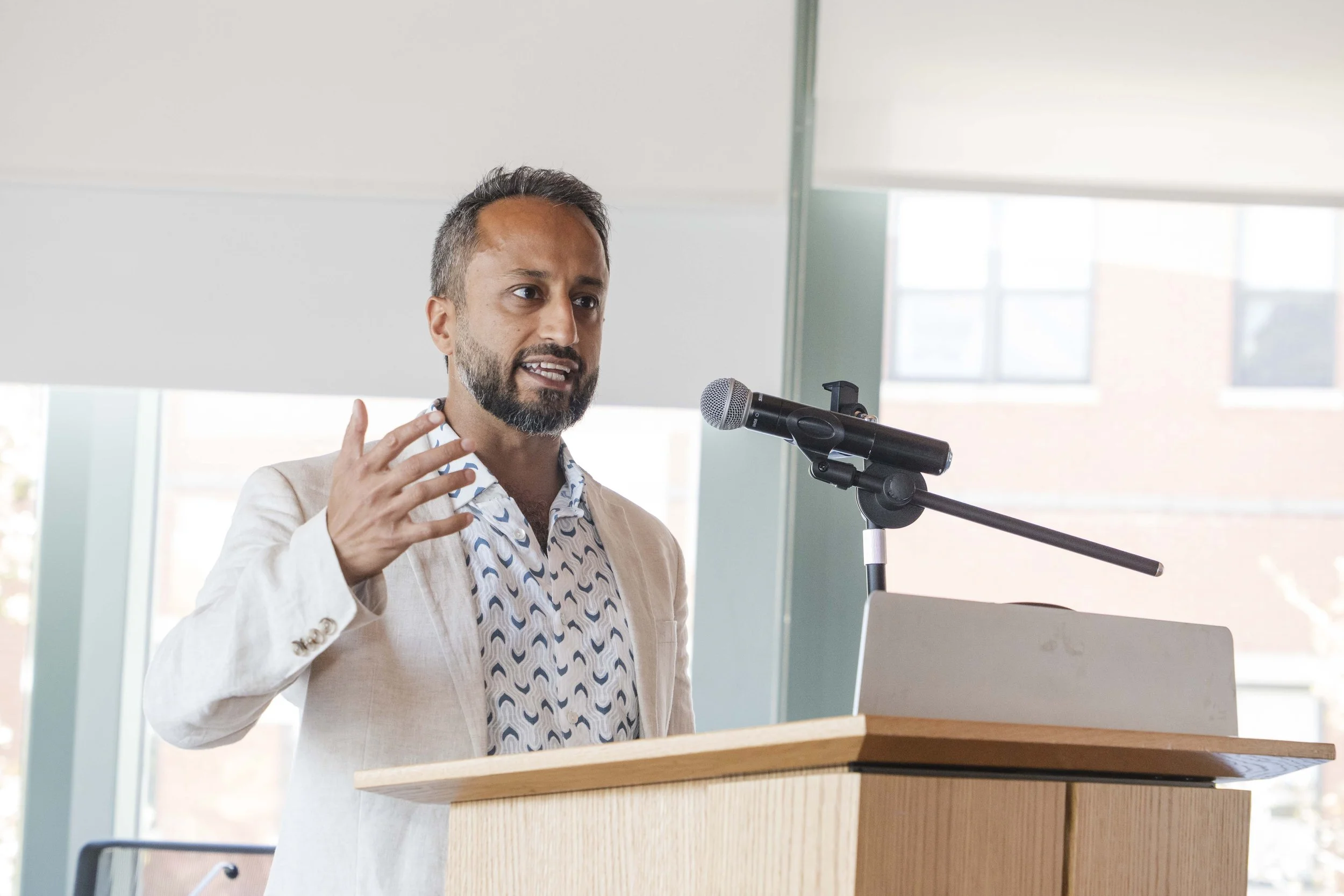
Dave Madan, Founder & Executive DirectorWelcome to the inaugural issue of The Builder Brief: our semiannual look at where TBC is headed, what we're learning, and why it matters. The Builder Coalition (TBC) is a Massachusetts nonprofit with a national footprint, working on both sides of the real estate market — cultivating the next generation of real estate investors and developers while organizing capital providers, public agencies, and industry institutions to open new pathways for them to compete and win.
Buildings shape the lives of not just the end user, but equally so of the builder. Two-thirds of the world's net wealth is held in real estate. It is the most powerful engine of economic mobility and wealth creation in our economy, and yet access to it remains tightly gated. Nowhere is this clearer than in access to capital — the most cited, least solved barrier in the field. Because of where we sit, we see things differently: we’ve built a strategy to generate new capital markets, and we're hard at work executing it.Our Capital Innovation Initiative runs on three tracks:
First, knowledge — our TBC Innovation Library now catalogs 180+ leading innovations from across the country advancing access to real estate investment and development. It's the most comprehensive field resource of its kind, and it's built to be used.
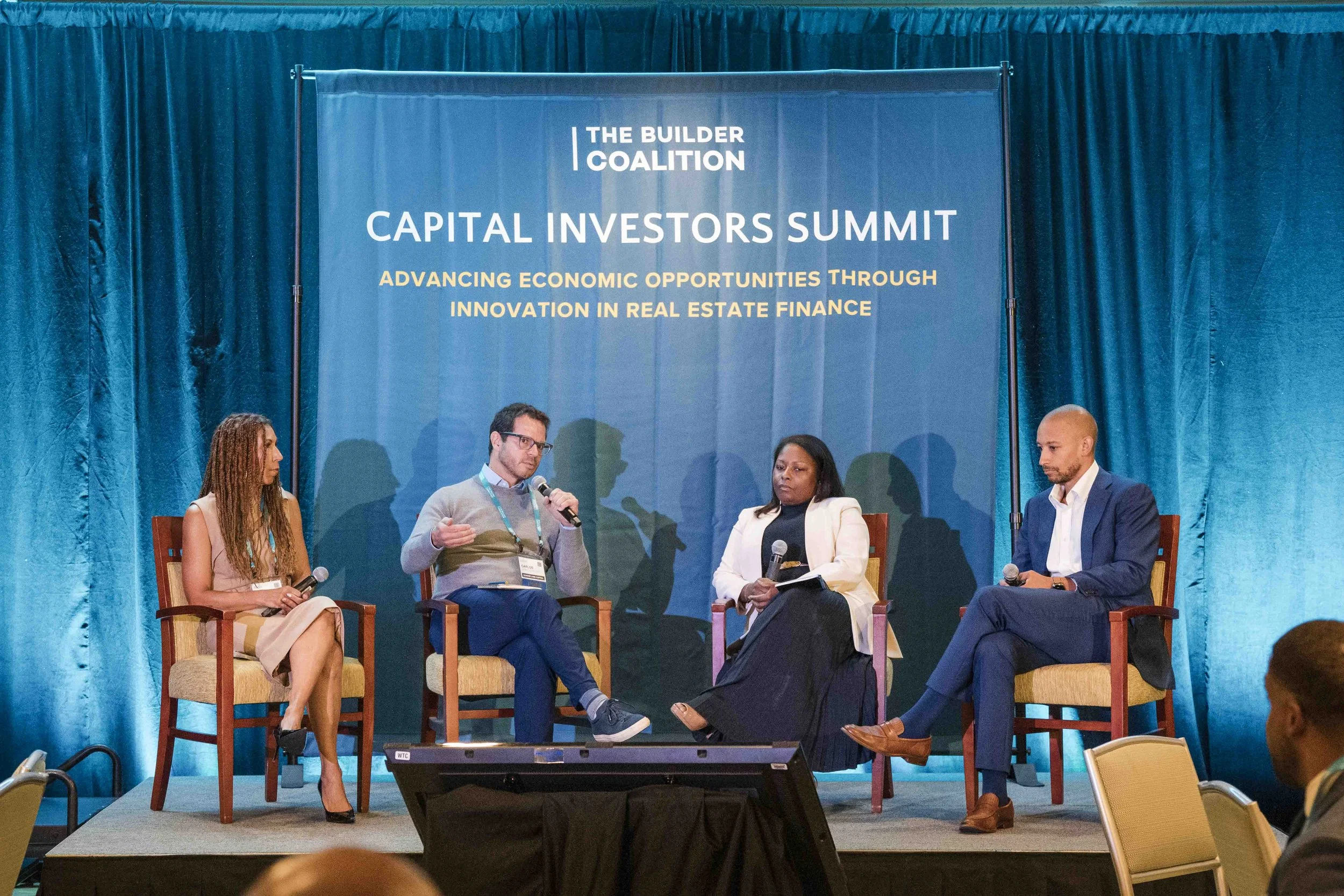
Second, ecosystem — our national Capital Investors Summit and virtual Capital Innovation Forums don't just convene people around the problem; they showcase the leading programs setting new norms for the industry, while pairing capital providers and emerging developers in structured matchmaking designed to produce deals. Our most recent Summit brought together 31 financial institutions and 53 emerging developers, and it generated an estimated $16 million in new investments, with multiplier impacts for the communities they serve.
Third, implementation — our advisory work helps financial institutions turn intention into output: new loan programs, new underwriting frameworks, new predevelopment funds. Since 2022, we've advised in the launch of more than $55 million in new capital products. And just last month, we helped to launch another $5 million fund, and immediately connected it to the emerging developers ready to deploy it.
We’re making new markets. And new markets mean new pathways to ownership, economic opportunity, and prosperity — for local developers and for the thriving communities they’re building.
In this issue of the Builder Brief, we’ll dig into our Capital Lab, the formal advisory arm we launched this year to scale this work with financial institutions across Massachusetts — and soon, nationwide. But I want to name the bigger picture here: TBC has spent years demonstrating that the capital gap is solvable — and that closing it expands who gets to build, own, and shape the places where people live and work.
Mark your calendars: we'll be bringing it all together at our next Capital Investors Summit in Atlanta on March 4, 2027 — convening capital providers and developers from across the country to do deals, share models, and continue rewriting the rules.
The real estate field is ripe for reinvention. We'll be glad to have you alongside us as we work to unlock its power.
UP NEXT
Capital in Motion
Six consulting projects in the pipeline. Two already underway. A $5 million fund already launched this spring. Here's how TBC's new Capital Lab is reshaping how financial institutions invest in emerging developers.-
For the past four years, TBC has been doing something quietly consequential: creating inclusive real estate capital markets, by advising financial institutions on how to build products for the developers we train.
Beyond convening conversations about capital access. Beyond publishing research. Rolling up our sleeves alongside banks, CDFIs, and public agencies to help them design and launch new financial products — and then getting that capital deployed, through our vast network of emerging developers ready to put it to work. As a result, through informal advisory work, we've helped to launch more than $55 million in new capital products.
This year, we turned years of reactive practice into a proactive offering — the TBC Capital Lab.
Introducing the Capital Lab
The TBC Capital Lab helps financial institutions to design, pilot, and implement new capital products and practices for emerging real estate developers. Where the TBC Institute builds the demand side of the market, cultivating developers who are investment-ready, the TBC Capital Lab builds the supply side: lenders and funders with the right tools to meet them. Each engagement pairs institutions with experienced consultants from the financial services industry, supported by TBC's national knowledge base and network. We commit not only to launching new products, but to finding the clients to utilize them.
Why TBC? We work both sides of this market simultaneously — training the developers and advising the institutions that fund them. That position gives us a clear view of where capital products fail in practice, and the institutional relationships to help redesign them.
The TBC Capital Lab is currently in a Massachusetts-focused pilot phase — working with local and regional institutions to formalize the model, stress-test it, and demonstrate outcomes we can take to scale. The Capital Lab is supported in part by JPMorgan Chase, whose investment reflects a shared belief that expanding capital access for emerging developers is both a market opportunity and an economic imperative.
The early results are hard to argue with. Without advertising the program, we have six consulting projects lined up this year — two regional banks, two CDFIs, and two economic development agencies — with two of those engagements already underway, and with a $5 million predevelopment fund already launched last month. We haven’t yet needed to market the service; institutions are seeing the untapped market potential. By 2028, our Capital Lab aims to catalyze an additional $75 million or more in new or redesigned capital investments, establishing an adaptive, scalable national model for inclusive real estate capital markets. We've reached program capacity for 2026, but we welcome institutions to reach out and get on the waitlist for 2027.
Convening at the Epicenter
In March 2027, TBC will host our second annual Capital Investors Summit — this time in Atlanta.
The Summit brings together capital providers and developers from across the country for deal-making, model-sharing, and frank conversation about the future of capital access in real estate. At the 2027 Summit, we'll be excited to share the results of our Capital Lab pilot in Massachusetts, and to officially launch the program nationwide.
If you're at a foundation, CDFI, or financial institution thinking about how to deploy capital more effectively into emerging developer pipelines — this is the room you’ll want to be in. Register your interest at capitalinvestorssummit.com, or reach out directly to info@buildercoalition.com.
With Gratitude
We thank the TBC Capital Access Task Force — twelve industry leaders whose strategic guidance has been foundational to our capital access work, helping to shape the Capital Investors Summit, the Innovation Library, and the Capital Lab:Aidan Hume, Senior Vice President, CRE Team Leader — Cambridge Savings Bank
Andy Elliot, Associate Director, C-PACE Market Development & Strategy — Nuveen Green Capital
Darryl Settles, President — Catalyst Ventures Development
David Grossman, President — First Boston Capital Partners
Karen Kelleher, President of Community Development Financing — BlueHub Loan Fund
Katherine Martinez, VP Business Development, Greater Boston Region — MassDevelopment
Kenneth Willis, Senior Vice President — Federal Home Loan Bank of Boston
Martha Nay, Executive Director & Senior Transactions Officer at Eaton Vance Real Estate Investment Group — Morgan Stanley
Megan Mulcahy, Director of Lending & Chief Credit Officer — Massachusetts Housing Partnership
Saeed Coates, President — The GPG Companies
Sharniece Benders, Vice President, Capital Markets — Berkshire
Troy Depeiza, Principal — DREAM Collaborative
TBC SPOTLIGHT
Fellows in Action
Lucian McPherson and Kevin Mapp are converting vacant properties into homes across Boston and the Gateway Cities. Their story is a window into what happens when emerging developers get the right knowledge, network, and capital access.-
Lucian McPherson and Kevin Mapp are betting on the places that others pass over.
At McPherson Development, two longtime friends are converting long-vacant properties into income-restricted homes and scaling multifamily developments that support working families — in Boston neighborhoods and in Gateway Cities like Fall River and New Bedford that have long been underinvested. The work of Lucian and Kevin was recently highlighted in Banker & Tradesman, a recognition of how deep local knowledge, innovative financing, and strategic partnerships can transform communities that the market has largely ignored.
Who They Are
Lucian McPherson launched McPherson Development in 2021 after nearly three decades in the industry. Kevin Mapp, who spent years in corporate finance before making the move into development, joined as Vice President of Operations. Together, they offer a full spectrum of services: residential and commercial construction, project management, and general contracting — with a focus on projects that strengthen communities while creating pathways to homeownership for working families.
Their focus is on projects the market tends to avoid. Construction costs don't change whether you're building in Fall River or Dorchester — but the revenue does, and the margins get tight fast. McPherson Development has built its model around navigating that gap.
TBC as a Growth Lever
As McPherson Development scaled, they turned to The Builder Coalition for mentorship, guidance, and connections to specialized capital partners — resources that proved critical in navigating the complex financing and entitlement challenges that define adaptive reuse and ground-up work.
"We realized it's less about competition, because there's no lack of deals out there. It's just the right deal for the right person. We find it more of a community for developers than it really is competing against each other."
— Kevin Mapp
Access to that community opened doors to capital they didn't know existed.
"To have access to those specialty lenders — gap financing, entitlement financing — and introductions to the whole spectrum, from private investors to certain divisions of large banks I never knew existed: that's been great."
— Lucian McPherson
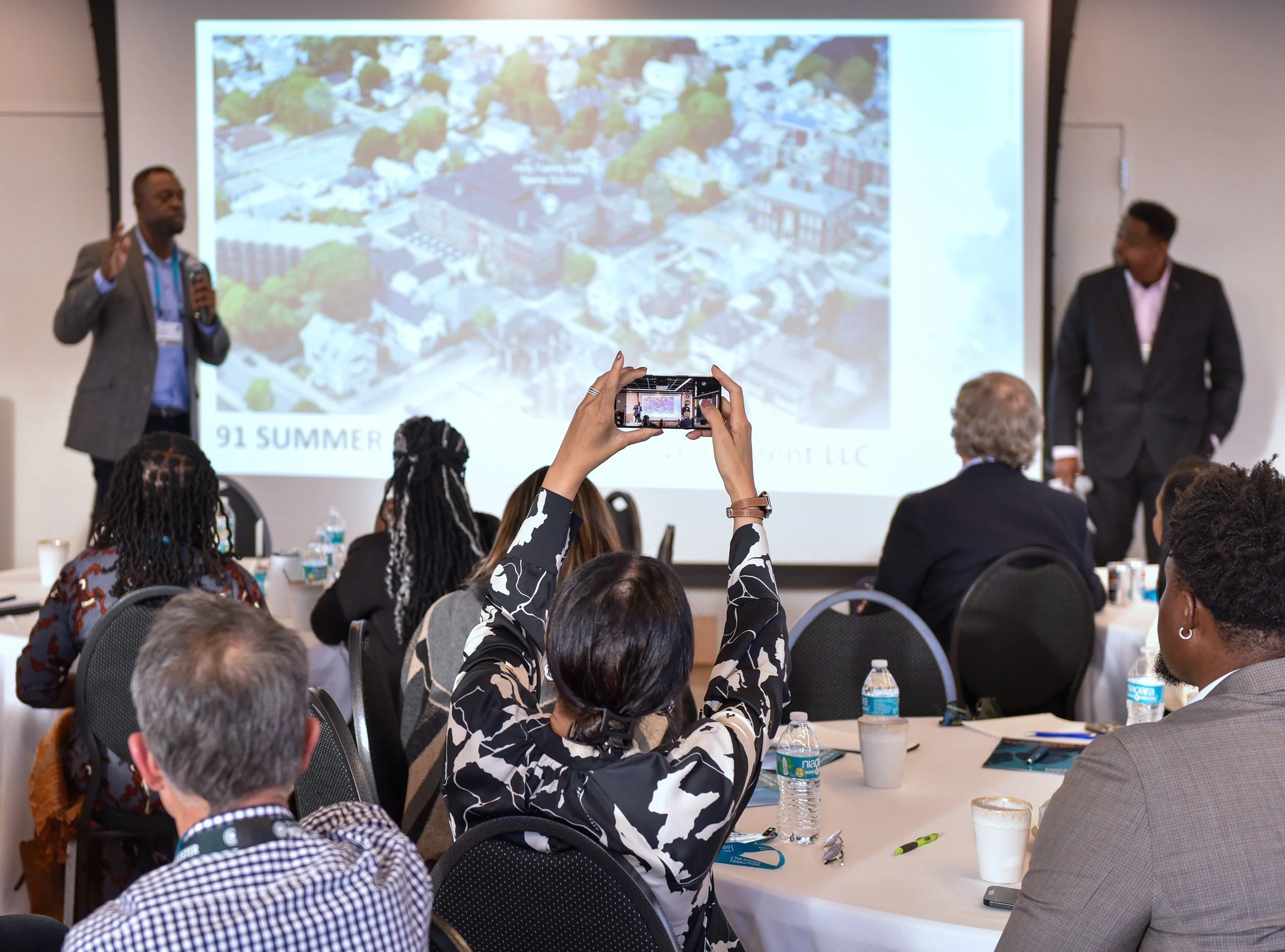
That increased access is already showing up in their pipeline. In Fall River, they're wrapping up conversion of an abandoned parish schoolhouse into income-restricted condominiums, supported by MassHousing's CommonWealth Builder program. In Dorchester, they're preparing to break ground on nine new units for working families.
Forward Vision
For McPherson and Mapp, housing production in underserved markets isn't a detour from wealth creation — it's the path. Demand is real, municipal partners are motivated, and the developers with on-the-ground knowledge and local relationships are the ones best positioned to unlock the opportunities.
"When teachers, firefighters, and city workers can live in the communities they serve, that's when you start building generational wealth. Getting that first home is a powerful way to bridge the gap."
— Lucian McPherson
INVEST
Partner With TBC for Impact & Growth
TBC's 3,000+ person network spans developers, capital providers, public agencies, and industry leaders. Our partners are at the table when deals get done. Nine years in, Redgate shares what genuine partnership with TBC looks like — and how it shows up in how they operate every day.-
Sponsor Spotlight: Redgate
Redgate has been a dedicated partner of The Builder Coalition since our founding in 2017. The relationship began through Darryl Settles, TBC Founding Board Member, and President and Managing Partner of Catalyst Ventures Development. Since then, Redgate's support has grown into a meaningful partnership that extends well beyond its financial contributions.
"It quickly became clear that there was strong alignment between our teams," says Kristi Dowd, Principal at Redgate who leads the firm's Institutional Practice and Culture & Inclusion Team. "At its core, it comes down to shared values."
Redgate's core values — Driven to Lead, Thrive on Connection, and Embrace Humility — show up directly in how the firm approaches partnerships, and align with TBC's mission and work. That alignment also reflects a practical commitment: building more inclusive regional relationships, strengthening their recruitment pipeline, and shaping a culture where people feel connected and supported. "It's not just philosophical alignment," Dowd notes. "It's something that shows up in how we operate day to day."
Redgate NextGen: Visioning a Future in Real Estate
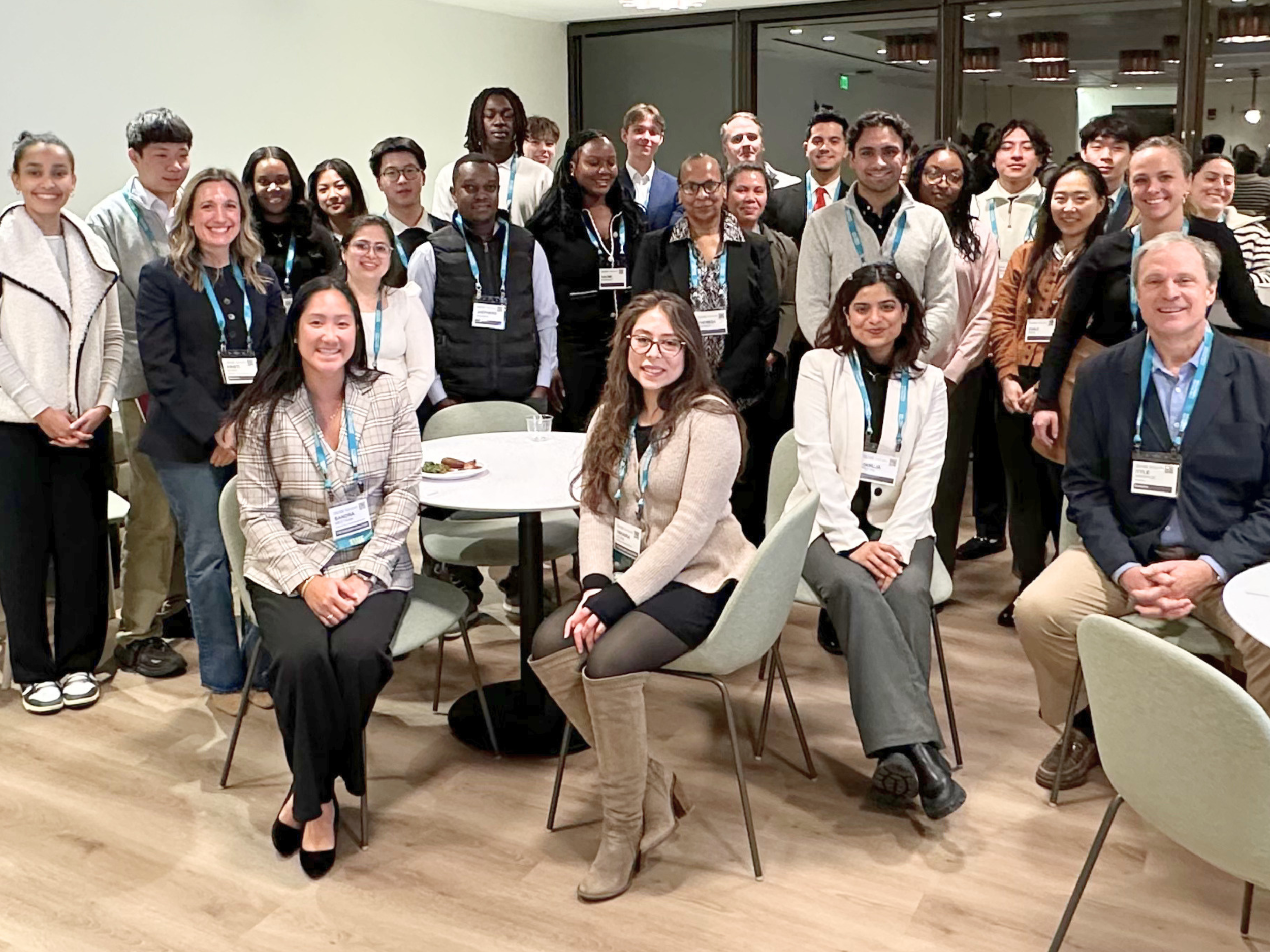
In February 2026, TBC and Redgate co-hosted Redgate NextGen, an industry access and networking event at Redgate's Boston headquarters designed to connect early-career professionals with leaders across real estate development, advisory, project management, and finance.
What made the evening stand out wasn't its scale — it was its intimacy. Rather than a large, transactional event, Redgate intentionally created space for real conversations: one-on-one exchanges, personal guidance, and the kind of connection that continues well beyond a single evening. "Many of those conversations have continued beyond the event," Dowd shared.
For emerging professionals, many of whom were engaging directly with industry leaders for the first time, the night offered something genuinely rare: visibility into career pathways, access to mentors, and a sense of belonging in a field they're working to enter.
The impact ran both ways. "It wasn't just valuable for them — it was equally impactful for us," Dowd reflected. "There was a real sense of a two-way learning experience."
Redgate also hosted The Builder Coalition's annual Summer Social at Gibson Point, a new waterfront multifamily development. Following TBC's Revere Development Opportunities Tour, Redgate extended the program with a full takeover of Mila's at Gibson Point. The evening brought together emerging developers, aspiring professionals, and industry leaders around connection and community.
"Hosting The Builder Coalition at Gibson Point was a powerful reflection of Redgate's commitment to connection — and of the vision behind transforming this site into a place designed to bring people together," said Kyle Warwick, Principal, Redgate. “Creating communities where people can gather, connect, and thrive is at the heart of multifamily development, making it especially rewarding to see emerging professionals and industry leaders do just that in the space.”
Building the Next Generation
"Building the next generation of leaders means showing up consistently and genuinely, reaching beyond your immediate network, investing the time, and through mutual learning, helping people find direction and maximize their strengths,” said Kristi Dowd, Principal, Redgate.
Events like Redgate NextGen and the Summer Social are what purposeful partnership looks like in practice — not just writing a check, but opening doors, sharing knowledge, and investing in the people who will shape the industry's future. As TBC's network of developers, investors, and institutional partners continues to grow nationally, the organizations willing to do that work are the ones helping move the whole sector forward.
The next generation of real estate leaders is emerging. What would it take for you to be part of their story?